When “What If?” Takes Over: Understanding the OCD Cycle
“But what if?”
Those two words can carry a lot of weight when you have OCD.
What if I missed something?
What if I did something wrong?
What if this thought means something about me?
What if I can't be completely sure?
OCD can make uncertainty feel urgent, like you need to figure something out before you can move on. So you check, review, avoid, seek reassurance, or keep analyzing, hoping to finally feel certain.
And sometimes you do feel better.
For a little while.
Then another “what if?” shows up, and the cycle starts again.
That's part of what makes OCD so exhausting. The anxiety and discomfort are real, and the need to know for sure can feel incredibly urgent. The more you search for certainty, the easier it is to get pulled back into the cycle.
The good news is that OCD is treatable. Once you begin to understand what keeps the cycle going, you can start learning how to respond to OCD differently.
Why Does OCD Feel So Convincing?
OCD has a way of making uncertainty feel like something that needs to be resolved.
A thought pops up, and instead of being able to let it pass, your brain starts looking for an answer.
What if this means something?
What if I missed something?
What if I'm wrong?
What if something bad happens because I didn't do enough?
The more you try to find certainty, the more important the question starts to feel.
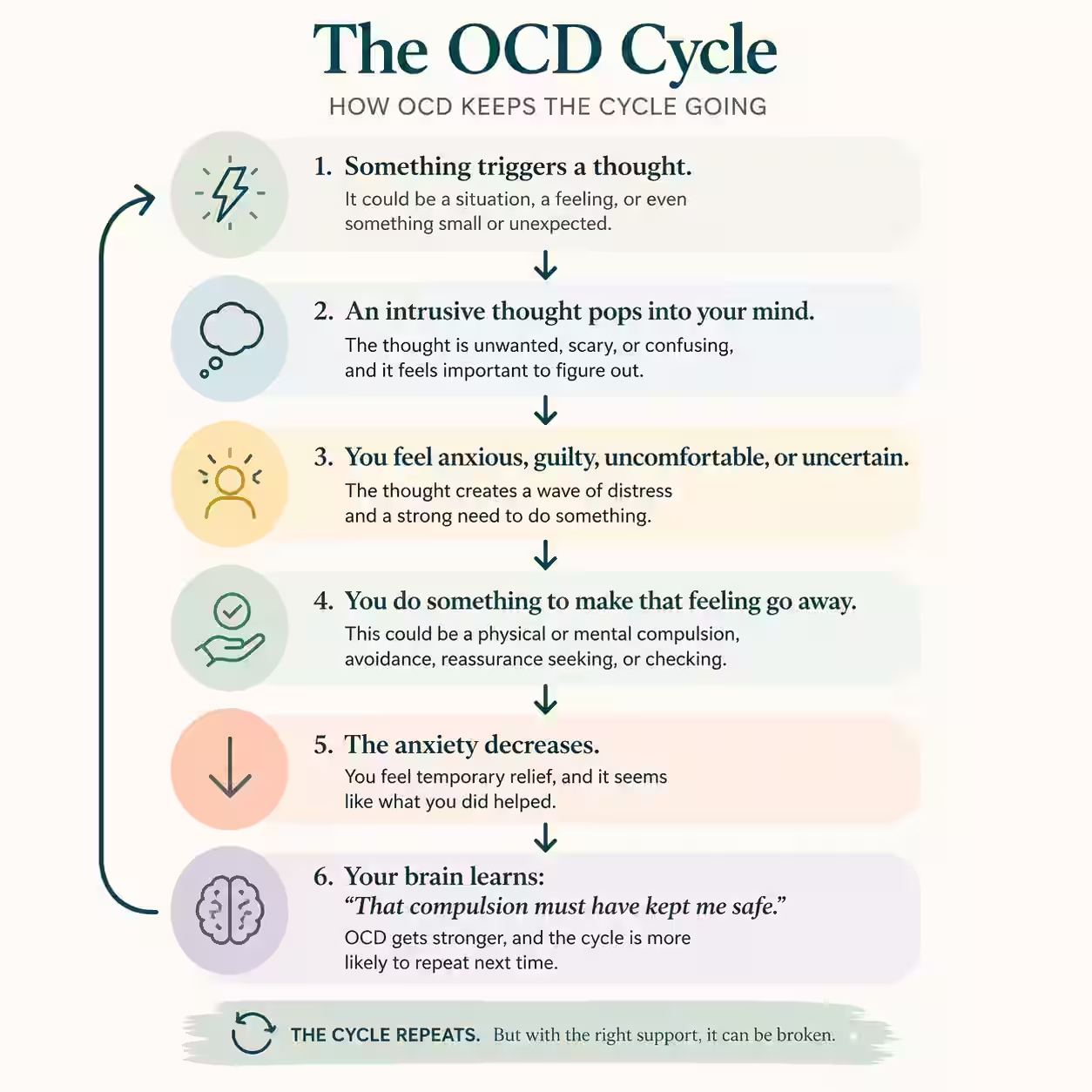
This is part of what makes OCD so convincing. The anxiety and discomfort are very real, even when the threat OCD is warning you about may not be. That distress can create a powerful urge to do something, whether that's checking, reviewing, avoiding, asking for reassurance, or engaging in another compulsion.
For a moment, the compulsion may bring some relief.
But that relief is also what keeps the cycle going.
To understand why, it helps to look at what happens each time OCD pulls you into the cycle.
The Relief Is Real, But It's Temporary
Compulsions often do make you feel better.
You check, and your anxiety comes down. You ask someone for reassurance, and you feel calmer.
You mentally review what happened, and for a moment you think, “Okay, maybe everything is fine.”
That relief can make it seem like the compulsion worked.
But your brain may learn something very different:
“I felt better after I did that, so I must have needed to do it.”
The next time a similar thought or feeling comes up, the urge to perform the compulsion can become even stronger. Your brain has started to associate the compulsion with feeling safe.
And so the cycle repeats.
This is why simply telling yourself to “stop worrying” usually doesn't work. Your brain is responding as though there is a problem that needs to be solved.
OCD Wants Certainty
At the center of so many OCD cycles is uncertainty.
OCD asks questions that don't always have perfect answers.
What if I accidentally hurt someone?
What if I made the wrong decision?
What if I'm secretly a bad person?
What if I didn't clean that well enough?
What if I can't trust my memory?
The natural response is to try to find an answer. You might replay a conversation, search online, check your memory, ask someone what they think, avoid something altogether, or keep analyzing until you finally feel certain.
The problem is that OCD is rarely satisfied for very long.
There is almost always another “But what if...?”
You may get to 99% certainty, and OCD will immediately become interested in the remaining 1%.
The more we try to get rid of uncertainty, the more we teach our brain that uncertainty is something we need to be afraid of.
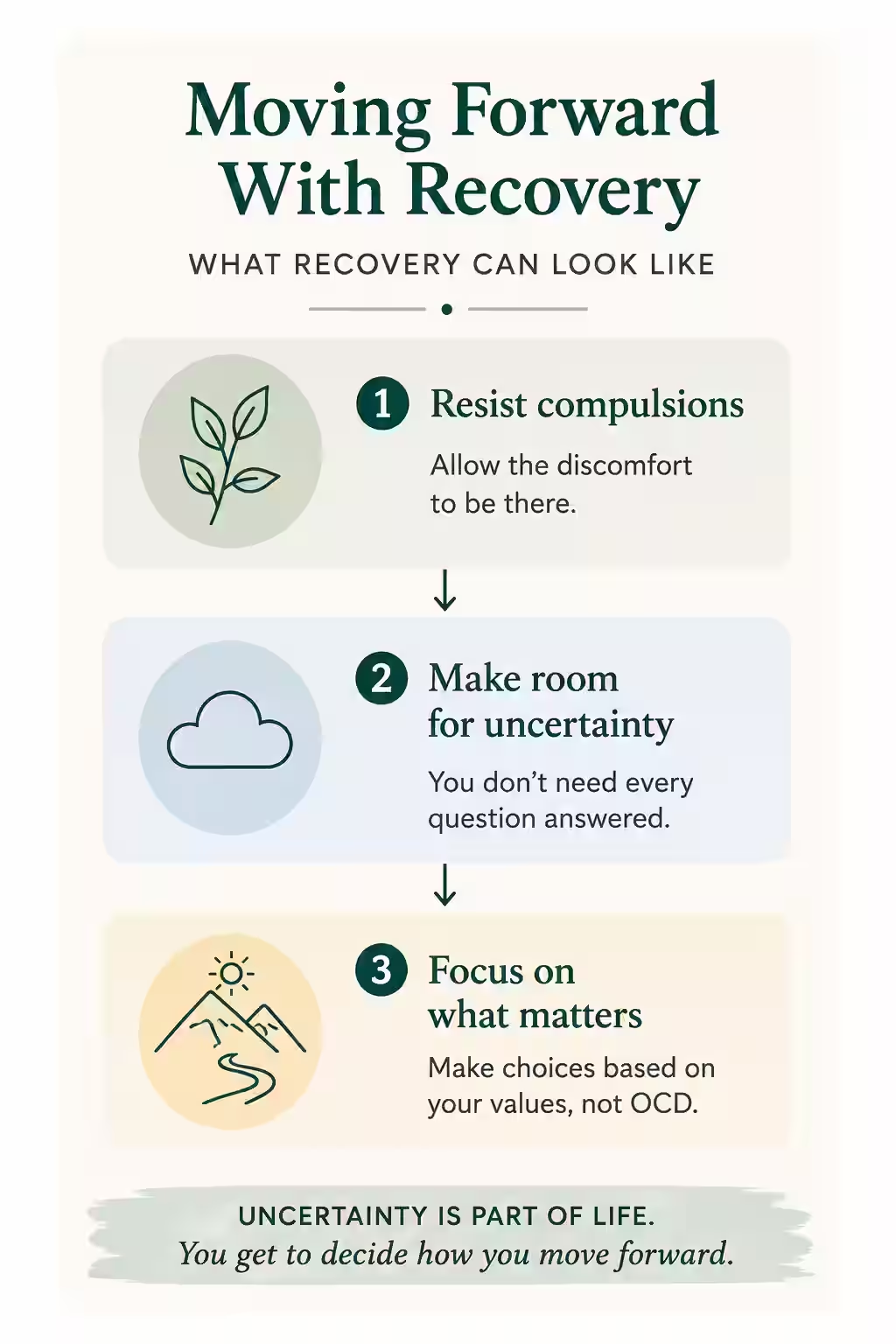
Recovery asks us to practice something different.
How Treatment Helps Break the Cycle
Treatment for OCD isn't about proving that every intrusive thought is false or convincing yourself that nothing bad will ever happen. That would still be giving OCD the certainty it's asking for.
Instead, treatment helps you learn that thoughts, feelings, and uncertainty can exist without immediately needing to do something about them.
Exposure and Response Prevention (ERP) is a first-line treatment for OCD. ERP helps you practice facing the thoughts, feelings, situations, and uncertainty that OCD tells you to avoid, without responding with the usual compulsion. It's supposed to feel uncomfortable. That's part of the work. Instead of trying to make the discomfort go away, we practice allowing it to be there and moving forward anyway. Over time, this gives your brain the opportunity to learn that you can experience uncertainty without needing a compulsion to feel safe.
Acceptance and Commitment Therapy (ACT) can be helpful when used alongside ERP. ACT focuses on changing how you respond to uncomfortable thoughts and feelings rather than trying to eliminate them. You can notice that a thought is there without having to figure it out, prove it wrong, or wait until it goes away before continuing with your life.
ACT also brings the focus back to what matters to you. Instead of letting OCD make the decisions, you can practice making choices based on your values, even when uncertainty is still there.
You Don't Have to Answer Every Question OCD Asks
Recovery isn't about finding the perfect answer that finally makes OCD quiet. Sometimes, the work is allowing the question to be there without trying to solve it.
There will still be moments when uncertainty feels uncomfortable. The goal isn't to never feel uncertain again. It's to learn that uncertainty doesn't have to decide what you do next.
Ready to Take the Next Step?
If OCD is keeping you stuck in cycles of doubt and uncertainty, you don't have to navigate it alone.
I offer virtual OCD therapy in New York, New Jersey, and Ohio.
Schedule a free 15-minute consultation to see if we might be a good fit.